
Faux wood blinds give the best balance of durability and price for most rooms in most homes. Aluminum is the most economical choice in dry, low-traffic spaces. Roller shades often beat both on a per-window basis when fabric opacity matters more than slatted light control.
Cost-effectiveness here means the value you get over the full useful life of the product, not the upfront price. A product that costs less and needs replacing twice as soon costs more. This article covers which product gives you the best return for which room, with specific reasoning for each.
What 'Cost-Effective' Actually Means for Window Blinds
Total cost over the product's useful life is the right metric. A $20 vinyl blind that lasts four years costs $5 per year. A $100 faux wood blind that lasts ten years costs $10 per year. But the faux wood product looked better, operated better, and didn't require a replacement-sourcing trip in year five.
Fit is the second variable. A product that doesn't fit your window correctly isn't cost-effective at any price. Side gaps that let light through in a bedroom defeat the product's purpose. Off-the-shelf sizing that doesn't match your frame requires adjustments or looks poor from installation day.
Room-by-Room Cost-Effectiveness Guide
The most cost-effective blind choice depends on the room's humidity, traffic level, and light control needs. Here's the breakdown for each common room type.
- Bedroom: Roller shade in light filtering or blackout fabric. Delivers the light control that a bedroom needs, costs less than faux wood blinds per window in most configurations, and has no slat gaps that let in morning light.
- Kitchen: Faux wood blind. Handles grease, steam, and frequent adjustment better than any other material. The durability over 8-10 years in a kitchen environment makes the mid-range price the most cost-effective choice.
- Bathroom: Faux wood blind. Same moisture argument as the kitchen. Real wood and fabric both underperform in humid bathrooms. Faux wood's longer useful life in moisture conditions is where the cost-effectiveness comes from.
- Home office: Aluminum blind or roller shade. Aluminum in a dry office with minimal daily handling. Roller shade in a window-facing-screen setup where glare control is the priority.
- Living room: Roller shade or faux wood blind. Roller shade if fabric look and fabric opacity matter. Faux wood if you want slatted light angle control.
- Children's bedroom: Faux wood blind. Takes the cleaning, the contact, and the occasional cord pull at an angle that would fail cheaper products sooner. The extra durability makes it the cost-effective choice over replacements.
- Formal dining room: Faux wood or real wood. Real wood only if the room is genuinely dry and the look is worth the reduction in expected life.
- Utility room / garage: Aluminum. Cheapest per window, functional, acceptable-looking. In a room where appearance is a minor concern, the lower cost and adequate durability make aluminum the most cost-effective choice.
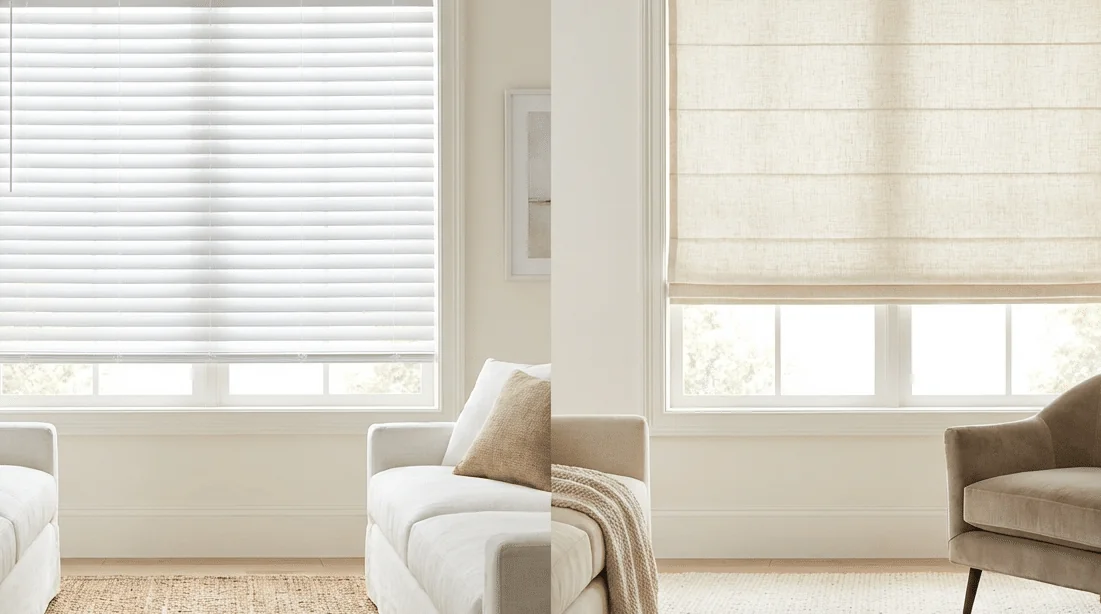
Faux Wood Blinds: Most Cost-Effective Across the Most Rooms
Faux wood is the most cost-effective blind material for the broadest range of rooms. It resists humidity, holds its finish under UV, and lasts 7-10 years in most conditions. It costs more per window than aluminum but significantly less than real wood.
The reason it beats aluminum for most rooms is durability under handling. Aluminum's cost advantage disappears when you factor in bent slats from daily use, particularly in kitchens and rooms with children.
Our horizontal blinds include faux wood options in the finishes and widths that cover most residential rooms in Aurora, IL.
Roller Shades: Cost-Effective When You Need Fabric
Roller shades often cost less per window than custom faux wood blinds and give you something slatted blinds can't: true fabric opacity control. If a bedroom or living room needs a specific light level between sheer and full blackout, a roller shade in the right fabric is usually more cost-effective than adding a liner or secondary treatment to a blind.
Our roller shades are available in light filtering, room darkening, and blackout fabrics, custom-measured for your windows.
What Looks Cheap but Costs More Over Time
Cheap vinyl horizontal blinds are the clearest example. They're inexpensive per window, they yellow under UV within two years, they bend if touched incorrectly, and they typically need replacing by year four. The total cost over a decade exceeds the cost of a quality faux wood product installed once.
The same logic applies to any product bought primarily on upfront price without considering the conditions the room creates. A real wood blind in a humid bathroom costs more per year than faux wood because the real wood needs replacing sooner.
Our precision measurement guide explains why correct fit affects the value of any blind, regardless of the material.
Getting Cost-Effective Blinds in Aurora, IL
Creative Blinds and Drapes installs cost-effective, quality window treatments in Aurora, IL and surrounding communities. We're direct about what delivers value at each price point and what doesn't. Every order starts with a free in-home consultation.
For a comparison of how blind prices compare to other window treatment categories like shades, shutters, and draperies, see our window treatment pricing guide.
See our full service coverage on the service areas page or contact us to book your free in-home visit.